Needles Between Sets: The Wild World of Festival Pop-Up Tattoo Shops
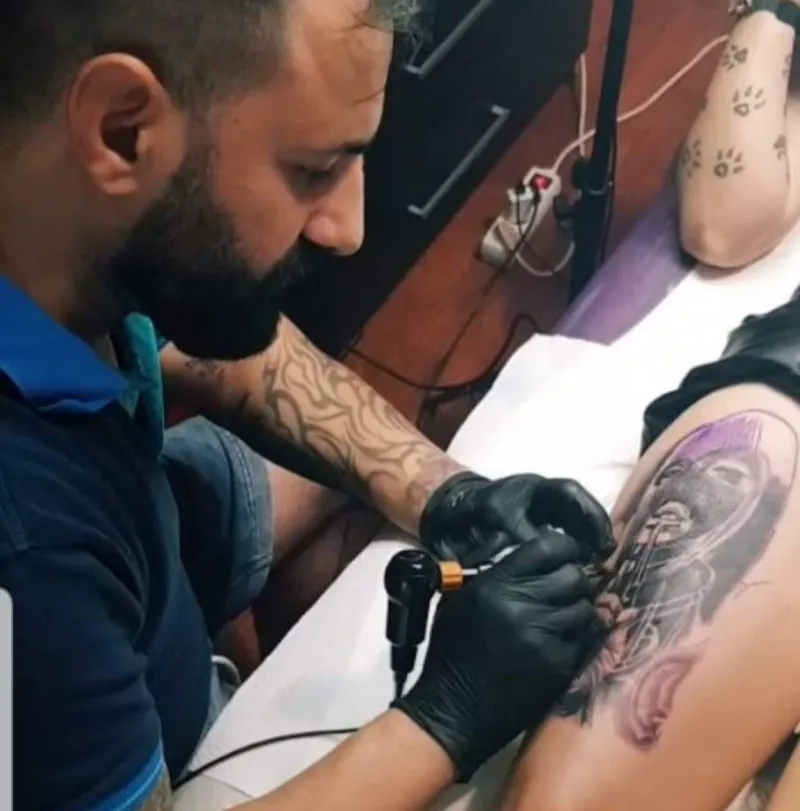
Photo: Jardel tattoo, CC BY-SA 4.0, via Wikimedia Commons
You've just watched your favorite band close out a set. Your ears are ringing, your chest is still buzzing from the kick drum, and somewhere in the back of your brain, a thought surfaces: I want to make this permanent. Walk twenty feet in the right direction at the right festival, and you absolutely can.
Pop-up tattoo studios at music festivals aren't new, but over the last several years, they've evolved from afterthought booths into legitimately curated experiences. We're talking artist lineups announced weeks in advance, flash sheet drops that sell out before gates open, and custom setups designed to hold their own against the visual chaos of a festival footprint. The intersection of live music and live tattooing has never felt more intentional — or more electric.
Setting Up Shop in a Field
Anyone who's tried to set up a pop-up shop at a festival knows the first challenge isn't artistic — it's logistical. Power access, lighting, sanitation stations, surface stability — all of it has to be solved before a single needle touches skin.
For artists like Miami-based tattooist Dani Reyes, who has worked pop-ups at festivals across the Southeast, the prep work starts months out. "You're basically building a sterile environment inside what is fundamentally a party," she says. "The tent is your clinic. Everything has to be locked in before you even think about the art."
That means portable autoclave equipment for sterilization, sealed surface covers that get changed between every client, and lighting rigs that can compete with afternoon sun and evening stage glow. Most experienced festival tattooers travel with a full kit that's been road-tested and refined over multiple events. The learning curve, they'll tell you, is steep — and most of the lessons come from something going sideways the first time.
Permitting adds another layer. Depending on the state, operating a tattoo business — even a temporary one — requires specific licensing, and some festivals require artists to coordinate directly with local health departments ahead of time. In states like California and New York, those requirements are strict. In others, the rules are more relaxed, but the best artists don't cut corners regardless. Reputation in this world travels fast.
The Flash Sheet as Festival Currency
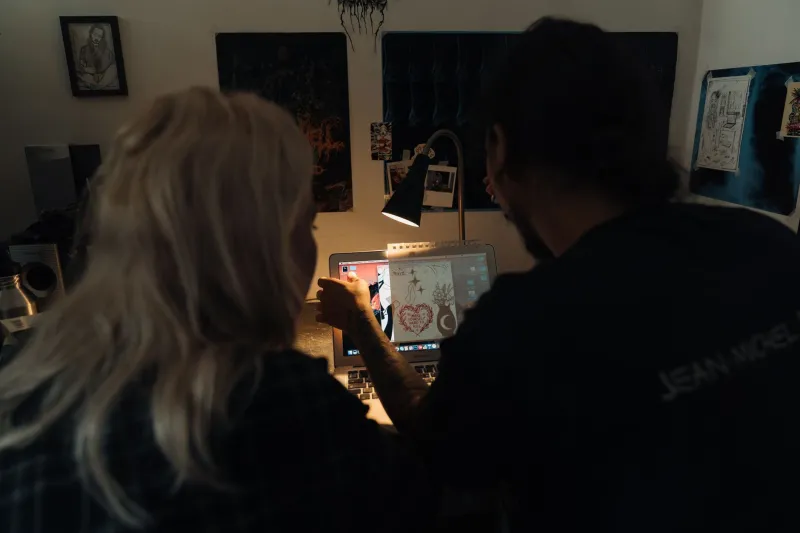
Walk up to most festival tattoo setups and the first thing you'll see is the flash — pre-drawn designs pinned to foam boards or hung on clip rails, ready to go. Flash is the backbone of festival tattooing for a reason: it's efficient, it's accessible, and when it's done well, it becomes a collector's item in its own right.
Festival flash tends to reflect the energy of the event itself. You'll find designs built around the musical genres headlining that weekend — death metal iconography at heavier fests, psychedelic botanicals and sun symbols at jam-band gatherings, bold traditional roses and daggers at rockabilly events. The best artists tailor their sheets specifically to the crowd they're walking into.
Chicago-based artist Marcus Webb has made festival flash a signature part of his practice. "I usually design three or four sheets specifically for each event," he explains. "I look at the lineup, I look at the vibe of the festival — is it rowdy, is it chill, is it artsy — and I try to make flash that feels like it belongs there. People respond to that. They want something that's from that weekend, not just something generic."
Limited-edition flash — designs that are only available on-site and never repeated — has become a genuine draw for festival-goers who collect tattoos the way others collect vinyl. There's a scarcity element that makes the whole thing feel more meaningful.
Managing the Crowd Without Losing Your Mind
Here's the reality nobody talks about in the glossy festival recap posts: crowd management at a pop-up tattoo booth can be genuinely chaotic. When a headliner just finished and three hundred people are suddenly wandering the grounds with a spike of adrenaline and a loosened sense of consequence, a tattoo booth becomes a magnet.
Most experienced festival artists use a sign-up sheet or a digital queue system to manage flow. Some have adopted Instagram DM booking for same-day slots — attendees follow the artist, DM to reserve a time, and show up at their window. It keeps the line manageable and gives the artist a heads-up on what designs are being requested.
There's also the matter of consent and sobriety. Reputable artists are upfront about it: if someone seems too impaired to make a sound decision, they don't get tattooed. Full stop. "My rule is simple," says Reyes. "If I'm not sure you're going to be happy about this tomorrow, I'm not doing it today. I've turned away plenty of people, and I've never once regretted it."
That kind of professional standard is what separates the artists who keep getting invited back from the ones who don't.
The Stories That Only Happen Here
For all the logistical complexity, the reason artists keep coming back to festival work is the stories. The couple who got matching tattoos twenty minutes before a surprise proposal. The group of college friends who all got the same tiny design to mark their first road trip together. The solo attendee who showed up not knowing anyone and left with a piece of art and a conversation she still talks about.
"Festival tattooing is the most human version of this job," says Webb. "People are already emotional. They're already open. You're not just giving them a tattoo — you're giving them a marker for a specific moment in their life. That's a different kind of responsibility, and honestly, it's a different kind of privilege."
That emotional charge is part of what makes festival ink so sticky in the cultural memory. These aren't tattoos people got on a Tuesday afternoon because they had a gift card. These are tattoos people got while their favorite song was playing somewhere in the distance, while the sun was going down over a crowd of strangers who all felt, for a few hours, like family.
What's Next for the Pop-Up Scene
The pop-up festival tattoo experience is only getting more sophisticated. Some festivals are now building dedicated tattoo pavilions into their site maps from day one, treating ink culture as a programming pillar rather than a vendor add-on. Artist lineups are being announced with the same promotional energy as musical acts. Collaborative flash projects — where a tattoo artist teams up with a band to create exclusive designs — are becoming a real part of tour and festival marketing.
For the artists working this space, the evolution feels earned. They've spent years proving that tattooing in a field can be just as professional, just as artful, and just as meaningful as anything that happens inside a brick-and-mortar shop. The music brought the crowd. The ink made it last.
And somewhere at this year's festival, between the second and third sets, someone is sitting down in a folding chair and making a decision they'll carry on their skin for the rest of their life. That's the whole thing, right there.