Laser Money: Inside the Booming Business of Erasing What the Festival Crowd Left Behind
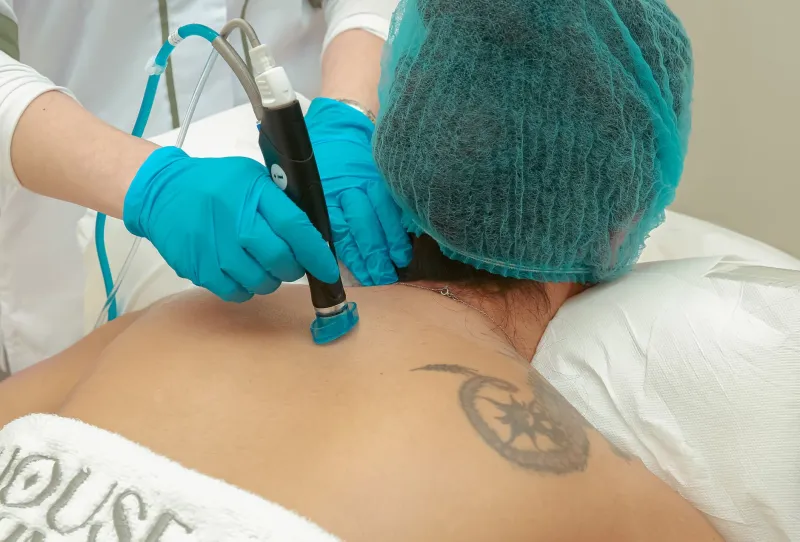
Somewhere between the third set and the last warm beer, a decision gets made. Maybe it's a band logo scratched into the wrist by a pop-up artist working out of a converted trailer. Maybe it's a lyric that felt profound at midnight and reads a little differently in the parking lot the next morning. Whatever the specific story, the pattern is the same: festival season ends, and a few weeks later, the phones start ringing at tattoo removal clinics across the country.
This isn't a small phenomenon. It's a business model.
The September Surge Is Real
Ask anyone who runs a laser removal studio in a city with a major festival circuit, and they'll tell you the same thing without hesitation. Late August through October is their version of Black Friday. "We track it every year," says one clinic owner in Nashville who asked to remain anonymous because she didn't want to seem like she was profiting from other people's pain — though, technically, she is. "The calls start coming in about three to four weeks after the big summer events wrap. People have sobered up, they've looked at the thing every morning for a month, and they've made their decision."
Industry data backs this up. The American Society for Dermatologic Surgery reported that tattoo removal procedures have grown consistently year over year, with the market now valued at over $4 billion globally. While not all of that is festival-related, removal specialists themselves are increasingly savvy about targeting the demographic. Clinics in markets like Austin, Chicago, and Los Angeles — cities that host massive annual music events — have begun running post-festival promotional campaigns with the kind of precision you'd expect from a concert ticketing platform.
One removal chain operating across six states quietly launched a "Fresh Start" promotion in September for the third consecutive year. The timing is not a coincidence.
What People Are Actually Trying to Erase
Not every removal client is walking in with a festival wristband still on their arm, but the patterns are telling. Removal specialists describe a consistent cluster of regrets that skew heavily toward music-adjacent ink: band logos from artists whose catalogs have since become complicated, lyrics that don't land the same way they did at 22, and — perhaps most poignantly — the names and symbols of artists who have since disappointed their fan bases in very public ways.
"I've removed more of one particular artist's logo in the last two years than I can count," says a laser technician in Atlanta, declining to name the artist for what she calls "obvious reasons." "People are grieving a little when they come in. It's not just about the tattoo. It's about what the tattoo meant."
This is where the psychology gets interesting. Festival tattoos occupy a unique emotional space. They're often acquired during peak experiences — moments of genuine joy, communal euphoria, and the specific kind of abandon that only happens when you're surrounded by thousands of people who love the same thing you do. Removing them isn't just a cosmetic decision. It's a renegotiation of identity.
Dr. Priya Mehta, a psychologist based in Chicago who has written about body modification and identity, puts it plainly: "The tattoo becomes a container for the experience. When the experience sours — whether because the band changes, the relationship associated with it ends, or the person simply grows — the container has to go too."
The Cover-Up Economy Is Its Own Thing
Not everyone is reaching for the laser. A significant portion of festival regret gets redirected into the cover-up market, which operates differently but draws from the same emotional well. Skilled tattoo artists who specialize in cover-ups describe their work as a form of collaboration — part therapy session, part creative problem-solving.
"People come in ashamed, and I always tell them the same thing: a bad tattoo is just a bad tattoo. It doesn't mean anything about who you are," says Marcus Webb, a cover-up specialist in Portland who estimates that roughly 30 percent of his clientele each fall has some connection to summer festival ink. "My job is to help them figure out what they actually want on their skin now, not what they wanted at 2 a.m. in a field."
The cover-up market benefits from a practical reality: full removal is expensive, slow, and painful. A quality laser removal series can run anywhere from $1,500 to $5,000 depending on size, ink density, and skin tone, and it typically requires six to twelve sessions spread across a year or more. A cover-up, by contrast, can be completed in one or two sessions at a fraction of the cost. For the impulsive festival tattoo — often small, often simply executed — the cover-up frequently wins on pure economics.
What the Data Actually Says About Follow-Through
Here's the part that might surprise you: most people don't actually go through with removal. Research consistently suggests that while a large number of tattooed Americans express some regret about at least one piece of ink, the percentage who pursue full removal remains relatively low — estimates hover around 17 percent of those who express dissatisfaction.
For festival tattoos specifically, anecdotal evidence from removal specialists suggests the follow-through rate is even lower. Many people book consultations, get quoted, and quietly decide to live with it. "I'd say maybe 40 percent of the people who come in for a consultation after festival season actually commit to a full removal series," says one clinic manager in Austin. "The rest decide it's not worth the time or money, or they come around on the tattoo itself."
That reconciliation process — making peace with impulsive ink — is its own kind of cultural phenomenon, one this site has explored from multiple angles. But the removal industry is betting, correctly, that enough people will cross the threshold to keep the business growing.
What This Says About Festival Culture
The emergence of a removal economy built around festival decisions is not an indictment of festival culture. It's a reflection of something true about it: these events are designed to lower inhibitions, amplify emotion, and create the conditions for decisions that feel permanent and right in the moment. Sometimes those decisions are permanent and right. Sometimes they're just permanent.
What's fascinating is that the tattoo industry profits on both ends. The pop-up artist at the festival makes money on the impulse. The removal clinic makes money on the regret. And somewhere in the middle, the cover-up artist makes money on the compromise. It's a full economic ecosystem built on the gap between who we are at our most alive and who we are on a Tuesday morning three months later.
Maybe that gap is the most human thing about all of it.