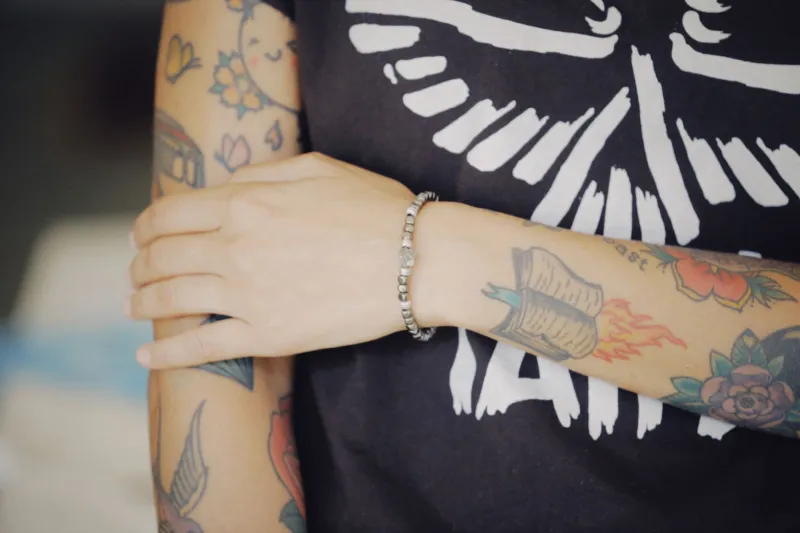
From the Booth to the Stage: The Tattoo Artists Who Are Becoming Festival Stars in Their Own Right
For most of festival history, the tattoo artist played a supporting role. Set up somewhere between the merch tent and the food vendors, they were the person you visited between sets — a skilled craftsperson providing a service, not a draw in themselves. That dynamic is shifting in ways nobody fully predicted, and the results are genuinely fascinating.
Across the country, a growing cohort of tattoo artists is leveraging the visibility, the cult followings, and the raw creative energy of festival culture to launch careers that extend well beyond the needle. They're releasing music, mounting gallery shows, performing live sets, and getting booked as featured acts. The tattoo booth, it turns out, was always a stage. Some artists just needed the right moment to step to the front of it.
The Festival Booth as Creative Incubator
Spend enough time working festivals and something happens to you creatively. You're surrounded by musicians, visual artists, photographers, and designers for days at a stretch. You're absorbing sound and energy while your hands are doing some of the most intimate, technically demanding work imaginable. That combination doesn't just sharpen your tattooing — it tends to spill over.
Tattoo artists who've worked the festival circuit consistently describe the environment as one of the most creatively charged of their careers. The cross-pollination is constant. You're talking shop with a touring guitarist during a four-hour sleeve session. You're watching a visual artist's stage production from the back of the field and thinking about how that color palette translates to skin. You're absorbing influences at a rate that a studio in your hometown simply can't replicate.
For some artists, that accumulation eventually demands a new outlet. The tattooing stays — it almost always stays — but it stops being the only thing.
When the Needle Picks Up a Microphone
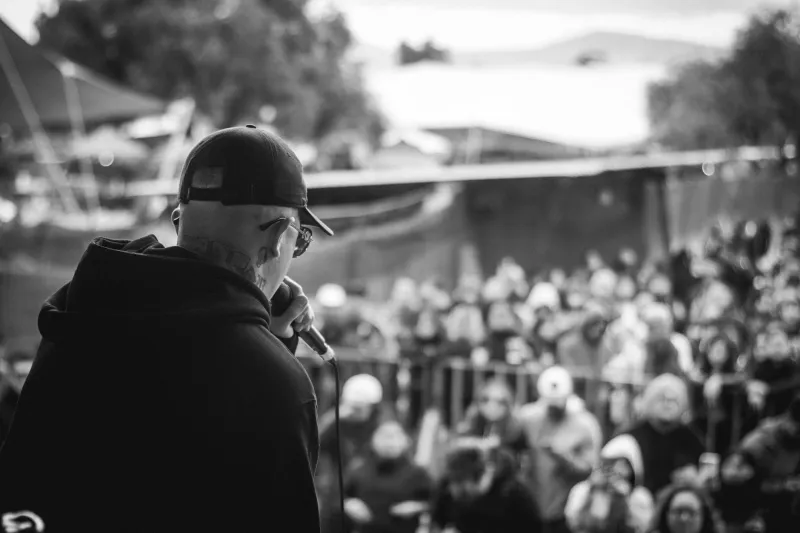
The crossover from tattooist to musician is perhaps the most visible of these transitions, partly because it maps so neatly onto the world these artists are already inhabiting. Several artists who built their names working high-profile music festivals have quietly been developing musical projects alongside their tattooing careers for years before going public.
What's striking about the musicians who've emerged from this world is how their tattoo backgrounds tend to shape their artistic identities. There's often an emphasis on visual presentation — album art, merch design, stage aesthetics — that reflects years of thinking about how imagery communicates. The branding instincts are sharp. The comfort with an audience is real, built through thousands of hours of working on strangers in semi-public spaces.
Festivals are starting to notice. A handful of forward-thinking events have begun programming tattoo artists not just as vendors but as performers, sometimes blurring the line entirely — live tattooing as performance art, conducted on stage, synchronized to music, with an audience watching the whole thing unfold in real time.
The Live Tattooing Performance Model
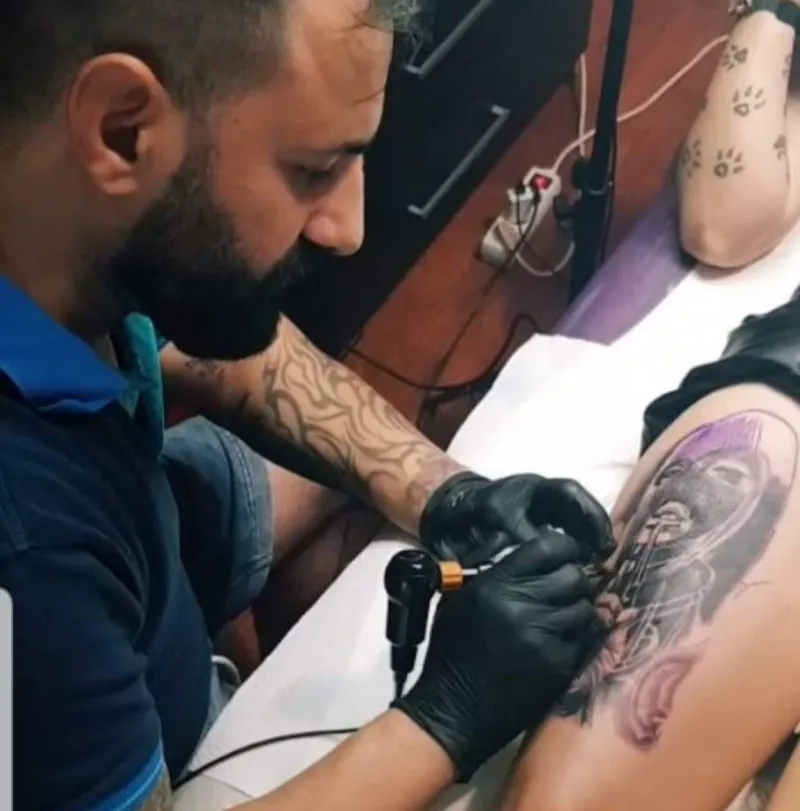
If you haven't seen a live tattoo performance, it's worth understanding what distinguishes it from simply tattooing at a festival. In the traditional booth setup, the artist is working in a service context — clients come to them, transactions happen, and the work is essentially private even if it's happening in a public space.
The performance model flips that entirely. The artist is the show. The tattooing happens on a stage or elevated platform, often with large-screen projection so the audience can watch the work develop in detail. The music is curated or performed live alongside it. The recipient of the tattoo becomes a collaborator in a piece of performance art rather than just a customer.
Events like certain stops on the Vans Warped Tour legacy circuit and newer boutique festivals in cities like Austin, Portland, and Brooklyn have experimented with this format, and the audience response has been striking. There's something deeply compelling about watching irreversible art being made in real time. The stakes are visible in a way that most performance art can't quite replicate.
Visual Art, Gallery Walls, and the Festival-to-Fine-Art Pipeline
Not every tattoo artist stepping out of the booth is doing it through music. A significant number are moving into gallery spaces, bringing the visual languages they developed on skin to canvas, print, and installation work.
The festival circuit has historically been one of the best networking environments for this kind of transition. Working a major event puts you in proximity to curators, collectors, and creative directors who are there for the music but are absolutely paying attention to what's happening in the tattoo tent. Word travels fast in those circles, and a tattoo artist with a distinctive enough visual identity can find themselves fielding gallery inquiries after a single high-profile weekend.
What tends to make the strongest gallery work from tattoo artists isn't just technical skill — it's the conceptual vocabulary they've built up over years of translating meaning into permanent imagery. These are people who think hard about symbolism, about how images age, about the relationship between a visual mark and the person carrying it. That's a genuinely interesting artistic framework, and it tends to produce work with more depth than the fine art world sometimes expects from craft-adjacent disciplines.
Festivals Are Catching Up
The smartest festival programmers are already ahead of this curve. Rather than treating tattoo artists as vendors to be tucked into a corner of the grounds, a growing number of events are building them into the actual programming — giving them stage time, featuring them in artist spotlights, and in some cases co-headlining them alongside musical acts.
This isn't just good optics. It reflects something true about what festivals actually are. The best ones have always been about more than music — they're about a convergence of creative communities, a temporary world where different art forms can collide and influence each other. Centering a tattoo artist as a headliner isn't a gimmick. It's an honest acknowledgment that the person who's been making permanent art on thousands of bodies at these events is, by any reasonable definition, one of the most significant creative forces in the space.
The New Festival Creator
What's emerging is a new archetype in the festival ecosystem — the multi-disciplinary creator who moves fluidly between tattooing, music, visual art, and performance. They built their reputation with a needle, but their creative ambitions were never going to stop there.
For fans who've followed these artists from the booth to the stage, the transition often feels inevitable in retrospect. You spend enough time watching someone pour genuine artistry into their work, and it's not hard to imagine that artistry finding new channels. The festival world, with all its creative friction and cross-pollination, turns out to be an ideal environment for exactly that kind of evolution.
The booth was never just a booth. Some of the most interesting artists in the game are only now proving it.