Gang Signs in Ink: How Your Favorite Band's Tattoo Style Became a Secret Language
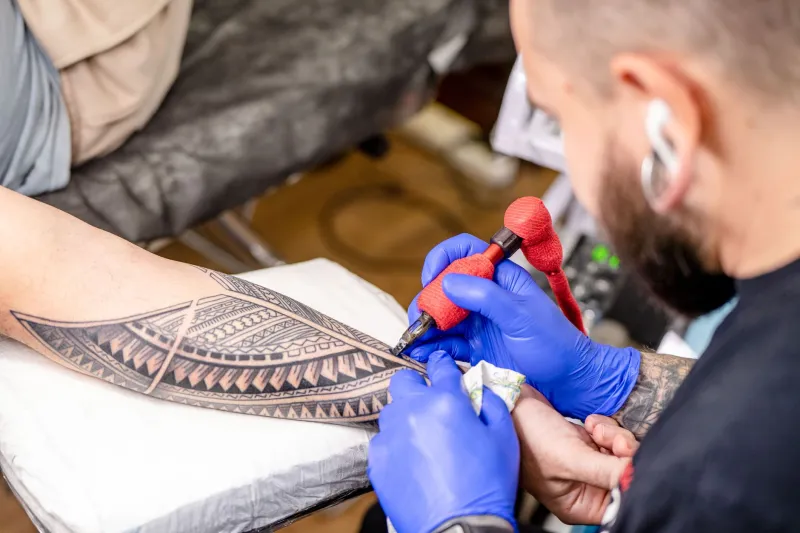
Walk into any tattoo convention in America and a seasoned artist can clock your music taste before you say a word. The imagery etched into your skin isn't just decoration — it's a dialect, and different musical tribes have been developing their own visual grammar for decades. Geometric linework with a lot of negative space? Probably a Bon Iver listener. Interlocking snakes, pentagrams, and heavy blackwork? Safe bet they're blasting Mayhem on the drive home. This isn't coincidence — it's culture doing what culture does best: building walls and doors at the same time.
The relationship between music fandom and tattoo aesthetics runs so deep it's practically load-bearing. And the artists doing the work are among the best-positioned people on the planet to decode it.
The Metal Code: Ornate, Dark, and Deeply Intentional
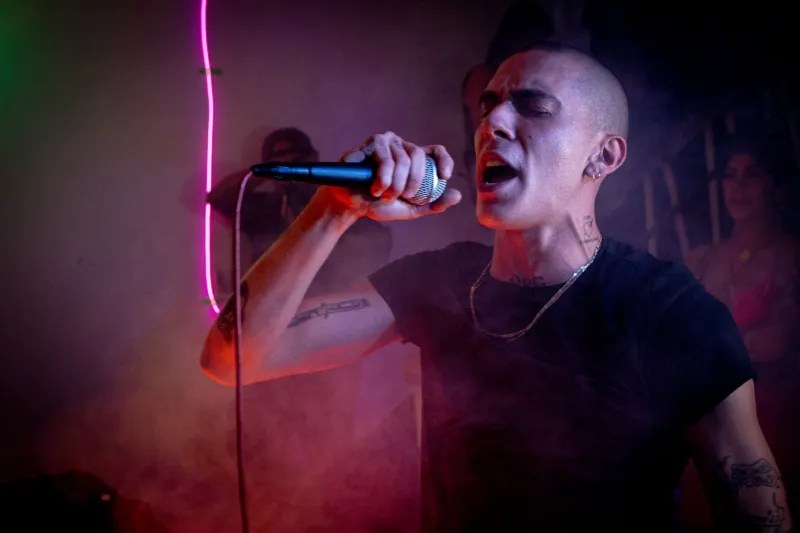
Ask almost any experienced tattoo artist about the most visually consistent fanbase they work on, and metal heads come up first. There's a reason for that. Metal — especially its subgenres like black metal, doom, and death metal — has always operated as a total aesthetic system. The album art, the band logos, the stage design, the merch: it's all coordinated to project a specific darkness.
"Metal fans come in knowing exactly what they want," says one Chicago-based artist who's been working conventions for over a decade. "It's usually gothic lettering, creatures, anatomical imagery, or dense blackwork sleeves. There's a commitment to the aesthetic that goes beyond just liking the music. It's a worldview."
Bands like Lamb of God, Behemoth, and Mastodon have artwork so iconic it functions almost like a coat of arms. Fans don't just get a logo — they get an entire symbolic vocabulary: skulls rendered with obsessive anatomical detail, ravens, alchemical symbols, thorned vines creeping up forearms. The look is cohesive enough that metal fans can identify each other across a crowded festival floor without exchanging a single word.
Indie's Quiet Revolution: Minimalism as a Statement
On the opposite end of the visual spectrum, indie rock and folk-adjacent fandoms have quietly developed one of the most recognizable tattoo aesthetics in contemporary American culture. Fine-line work. Single-needle portraits. Small, precise imagery — a moth, a typewriter, a longitude and latitude coordinate. Placement tends toward the inner wrist, behind the ear, the collarbone.
The aesthetic mirrors the music itself: understated but emotionally loaded. A Phoebe Bridgers fan isn't going to walk in asking for a full back piece. They're going to ask for a tiny skeleton in a specific pose, rendered in the thinnest possible line, placed somewhere that feels personal.
"Indie fans are often the most research-heavy clients," notes a Brooklyn artist who works heavily in fine-line portraiture. "They've found the exact reference image, they know the artist style they want, they've thought about placement for months. The tattoo is very considered. It's not impulsive — it's almost literary."
This isn't accidental. Bands like Sufjan Stevens, Big Thief, and Bon Iver have built entire artistic identities around the idea of careful, layered meaning. Their fans have absorbed that sensibility and it shows up on their skin.
Hip-Hop and the Rise of Script Culture
Hip-hop fandom has its own deeply embedded tattoo language, and it's evolved significantly over the past two decades. Old-school script lettering — names, mantras, neighborhood codes — has always been central to the aesthetic. But contemporary hip-hop culture has expanded that into something broader and more visually complex.
Kendrick Lamar fans show up with butterfly imagery pulled directly from To Pimp a Butterfly's cover art. Tyler, the Creator devotees lean into pastel-palette neo-traditional florals that mirror the visual world of IGOR and Flower Boy. Travis Scott's fanbase has pushed toward surrealist, almost melting imagery that feels pulled from an Astroworld fever dream.
"Hip-hop fans are incredibly trend-forward," says a Los Angeles artist with a clientele that skews heavily toward the genre. "When an album drops and the visual world around it is strong, I see that imagery in my chair within weeks. The turnaround between cultural moment and tattoo appointment is faster than any other community I work with."
Punk's DIY Permanence
Punk tattoos occupy a category all their own, partly because punk has always had a complicated relationship with aesthetics as a concept. The whole point was to reject the polished and the precious. So punk tattoo culture has historically leaned into the rough: hand-poked designs, stick-and-poke flash, deliberately crude imagery. Black Flag bars. Circle-A anarchist symbols. Band names in scratchy lettering that looks like it was written on a bathroom wall.
But here's the thing — that roughness is its own kind of precision. Getting a deliberately imperfect tattoo takes as much intentionality as commissioning a hyper-detailed sleeve. The aesthetic choice is the statement. "I've had punk clients who specifically don't want it to look polished," one Austin-based artist explains. "They'll tell me to make it look like it was done in someone's basement. That's not laziness — that's a very specific cultural signal."
The Password System
What all of this points to is something tattoo artists have understood intuitively for years: music-adjacent tattoos function as subcultural passwords. They communicate allegiance, taste, and tribal membership in a way that's both immediate and permanent. You're not just saying "I like this band" — you're saying "I live inside this world. I share these values. I know the references."
For festival culture specifically, this dynamic gets amplified. Walk through the grounds of a metal festival like Louder Than Life or a punk-leaning event like Riot Fest and you're essentially walking through a living gallery of subcultural identity. The ink is the lanyard. It's the wristband that doesn't come off.
And as music culture continues to fragment into increasingly specific micro-genres and fandoms, the visual dialects are getting more precise, too. It's no longer enough to identify as a "rock fan" or a "hip-hop head." The tattoo on your forearm can now signal which era of a band you're loyal to, which album changed your life, which tour you were actually at.
Why It Matters
There's something genuinely moving about the fact that people are using their bodies to map their musical lives. In a culture where so much is digital and disposable, the permanence of a tattoo tied to a specific sound or scene is a radical act of commitment. You're not streaming this. You're not unfollowing. You're saying this mattered enough to carry forever.
Tattoo artists working at the intersection of music and ink aren't just technicians — they're archivists. Every band logo, every lyric fragment, every album-art-inspired sleeve is a data point in a living record of American musical culture. And the collection keeps growing, one appointment at a time.