Needle Drop: The Science Behind Why Tattoos Make Your Favorite Songs Sound Brand New
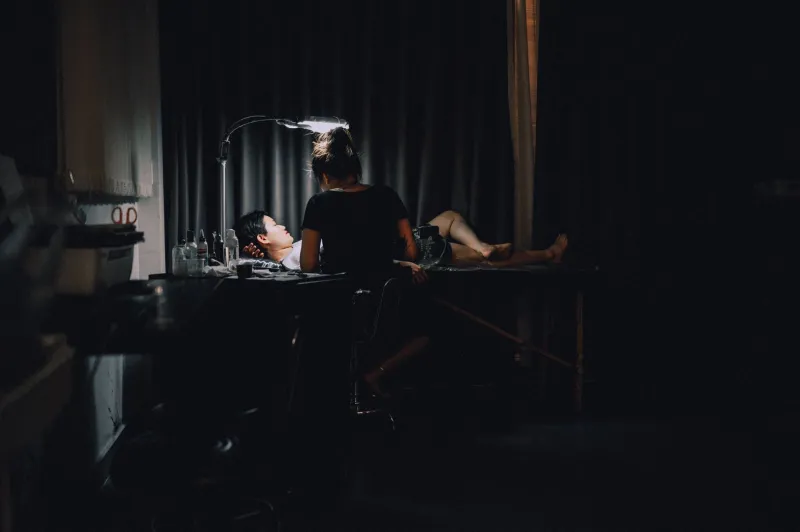
You know the moment. You're forty-five minutes into a session, the needle's been grinding away at your ribs or your forearm or that soft spot behind your ear, and then — out of nowhere — a song you've heard maybe five hundred times comes through the shop speakers and absolutely destroys you. Not in a bad way. In a why does this feel like the first time I've ever actually heard this way.
If you thought that was just the adrenaline talking, think again.
Your Brain on Pain (and Music, Simultaneously)
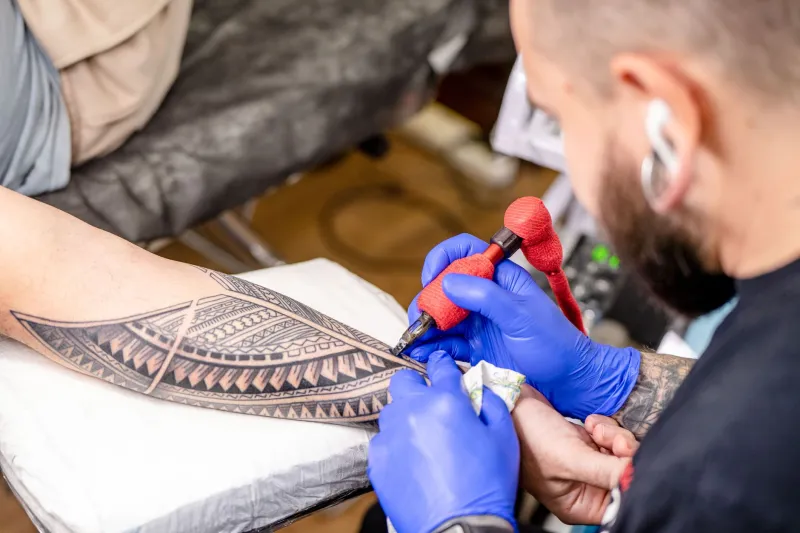
Here's the thing about what happens neurologically when you're getting tattooed: your body is doing a lot of heavy lifting all at once. The pain signals flooding in from the needle trigger a release of endorphins — your nervous system's way of saying okay, we're going to get through this together. Those same endorphins also happen to be deeply tied to how your brain processes reward, pleasure, and emotional memory.
Dr. Heather Chasman, a cognitive neuroscientist at a Chicago-area research institute who studies sensory overlap, explains it this way: "When you're experiencing acute, sustained pain, the brain's reward circuitry becomes unusually active. It's compensating. And music, which already stimulates those same dopaminergic pathways, essentially gets amplified by the neurological environment that pain creates."
In plain terms? Your brain is already wide open when that song comes on. The filters are down. The emotional volume is cranked.
Why Familiar Songs Hit the Hardest
This is where it gets genuinely wild. You'd think a new song would make the bigger impression — something you're hearing fresh, without any prior associations. But almost universally, people report that it's their old favorites, the ones they've lived with for years, that hit different in the chair.
That's not an accident. It's actually a function of how emotional memory works.
When a song is deeply familiar, your brain has already built a kind of scaffolding around it — memories, associations, feelings you've layered onto it over time. Under normal listening conditions, you process those associations in a relatively stable emotional state. But when your nervous system is flooded with endorphins and pain signals simultaneously, the brain essentially revisits those stored associations with a completely different chemical backdrop. The song is the same. You are temporarily, biochemically, not.
"It's a little like looking at a photograph you've seen a hundred times, but suddenly under completely different lighting," says Dr. Chasman. "The image hasn't changed. But what you notice in it, what you feel about it — that can shift dramatically."
Tattoo Artists Have Known This Forever
Ask any seasoned tattoo artist about the music-in-the-chair phenomenon and they'll nod immediately. They've been watching it happen for years.
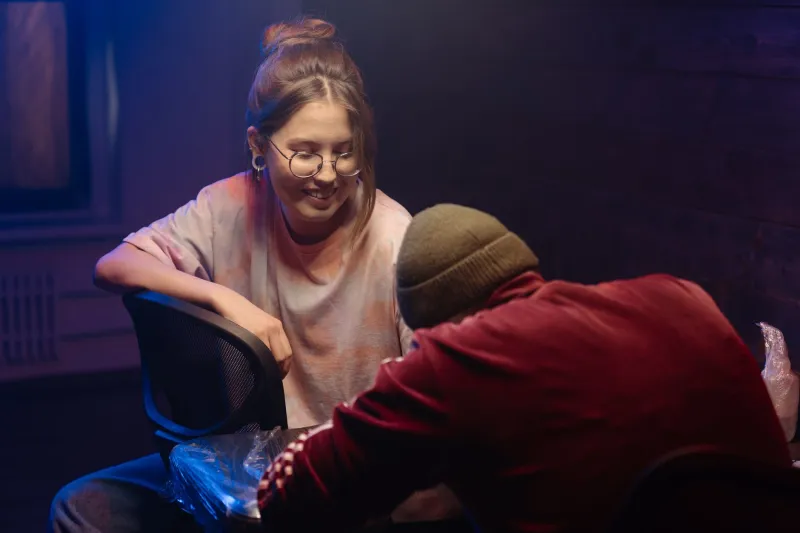
Marcus Delray, a tattoo artist based out of Nashville with over a decade of experience doing large-scale work, says the emotional responses clients have to music during sessions are some of the most intense he witnesses in his shop. "I've had clients laugh, cry, go completely silent mid-conversation because a song came on," he says. "I've learned to pay attention to what's playing when someone's energy shifts. It tells you something."
Many artists have developed intentional playlists specifically calibrated for different phases of a session — something ambient and low-key for the outline phase, something with more emotional weight for shading and color work, when the pain tends to deepen and the endorphin response peaks. It's not just vibe curation. It's almost therapeutic design.
"The music is part of the experience whether you plan for it or not," Delray adds. "So you might as well be intentional about it."
The Rewiring That Lasts After You Leave
Here's the part that nobody really talks about: this isn't just a temporary phenomenon that evaporates when the needle stops. For a lot of people, the song that hit them in the chair maintains that elevated emotional charge long after the session is over.
This is a well-documented feature of how memory consolidation works. Experiences that occur during heightened emotional or physiological states tend to be encoded more vividly and more permanently. The technical term is emotional memory enhancement — essentially, your brain flags high-arousal moments as important and stores them with extra detail.
Which means the song that cracked you open while you were getting your sleeve worked on doesn't just remind you of that day. It is that day, neurologically speaking. Every time you hear it, you're partially re-accessing that state — the pain, the endorphins, the vulnerability, the weirdly suspended sense of time that anyone who's sat for a long session knows intimately.
Jordan Voss, a touring musician from Austin who's covered in ink and has been getting tattooed since their early twenties, describes it as having a "second layer" on certain songs. "There are tracks I literally cannot listen to in a casual context anymore because they've been claimed by a session," they say. "It's not a bad thing. It's actually kind of beautiful. The tattoo and the song are fused."
When the Culture Gets It Right
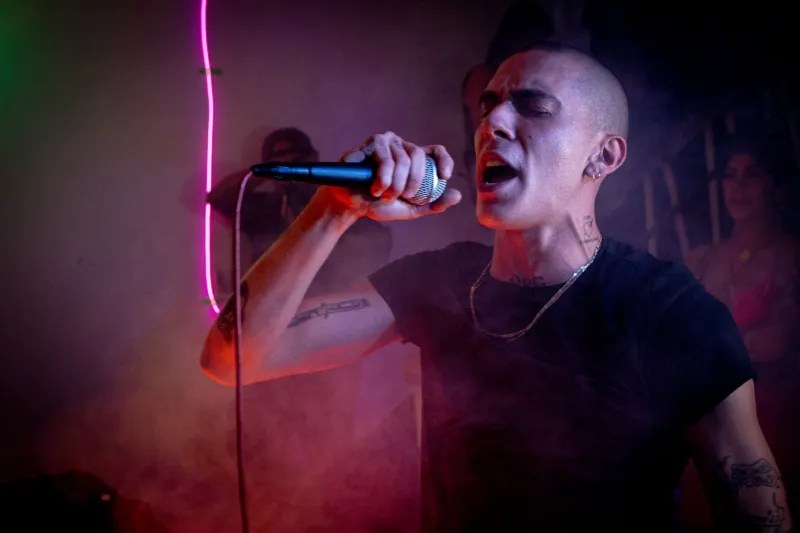
What's fascinating about this from a cultural standpoint is that the tattoo and music communities have been intuitively circling this truth for decades without the neuroscience to back it up. The instinct to play meaningful music during a meaningful tattoo session isn't arbitrary. The prevalence of music-themed tattoos — band logos, lyrics, album art — isn't just fandom. It reflects a genuine, felt understanding that these two things are doing something similar to us.
Both tattooing and music are experiences that mark time. They create before and after moments. They live in the body in ways that other art forms simply don't. A painting hangs on your wall. A song plays through your headphones. But a tattoo is in you, and so, in a very real neurological sense, is the music you heard while you got it.
So What Do You Do With This?
If you're someone who's particular about their sessions — and plenty of people are — it might be worth being intentional about the soundtrack. Think about what you want fused to this piece of art permanently living on your body. That might mean bringing a playlist. It might mean asking your artist what they typically play and whether they're open to switching it up. It might mean going in with zero musical expectations and letting whatever comes on be part of the story.
What it probably shouldn't be is background noise you ignore. Because your brain isn't ignoring it. Not even a little.
The needle drops, the song plays, and somewhere in your nervous system, something gets written that doesn't wash off. That's not metaphor. That's just biology doing what biology does — making the moments that hurt a little bit mean something permanent.